
PAKISTAN’S former prime minister Imran Khan became the third former premier barred from public office since 2012 after the country’s election commission on Tuesday (8) banned him for five years.
The ban followed Khan’s conviction in a graft case on Saturday (5). The law says such a conviction disqualifies an individual from public office for a period determined by the election commission.
Here are some facts about the bans and challenges faced by past leaders of Pakistan, where no elected prime minister has ever completed their full term in office since the country gained independence in 1947:
Yousaf Raza Gilani was barred from public office for five years in 2012 after he was removed as prime minister by the Supreme Court on contempt charges for refusing to reopen corruption cases against then-president Asif Ali Zardari.
Gilani missed the 2013 elections but successfully rejoined electoral politics in 2018.
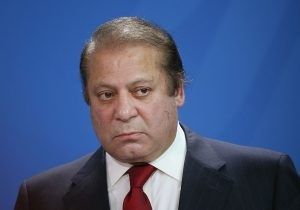
Prime minister Nawaz Sharif was barred for life from electoral politics in 2018 by the Supreme Court after he was found guilty of not declaring his source of income.
But he continues to exercise power over his party, which is currently in power with his younger brother, Shehbaz, the prime minister.
On 18 occasions, prime ministers have been removed for reasons including corruption charges, direct military coups and forced resignations due to infighting in ruling groups. There was one assassination.
Khan joined this group when he was removed in a no-confidence vote in 2022, which he says was orchestrated by the country’s powerful military. The military denies this.
Under Tuesday’s ruling, Khan will be ineligible to run in the upcoming national elections, due to be held by November but which may be delayed for a few months.
There is no limit on the number of times an individual can become prime minister in Pakistan. Khan will be 75 when he is eligible again, unless this ban is overruled by a court.
A number of prominent political leaders have also faced bans in recent years, including Khan’s former close aide but now rival, Jehangir Tareen, who was banned for life, and two former Sharif cabinet ministers who were ruled ineligible for five years.
Pakistan also disqualified many political leaders under a draconian law in the 1950s.
(Reuters)

